Scott Fitzgerald’s drinking problem
A Moveable FeastF. Scott Fitzgerald’s drinking problem becomes a repeated force in his relationship with Zelda Fitzgerald and in his attempts to work. Ernest Hemingway’s account traces a change: drinking first appears as a dangerous excess during a journey through France, then as part of a Parisian cycle of parties, quarrels, and interrupted work, and finally as a daytime presence that leaves Fitzgerald with few intervals of sustained writing. Yet the portrait is not uniform. Hemingway distinguishes the disruptive behavior of Fitzgerald when drunk from the humor, pleasantness, and loyalty he continued to show when sober.
A Warning on the French Journey
During a trip across France, Fitzgerald became ill enough to fear that he might die before they reached a town. Hemingway discussed congestion of the lungs with him and urged him to drink Mâcon, describing the wine as a remedy. Fitzgerald’s spirits lifted briefly, but he soon asked whether they could reach a town before the fever and delirium Hemingway had described. The account therefore places alcohol inside an already uncertain episode: wine is offered as comfort, even as Fitzgerald’s condition and the pair’s improvised medical discussion make the journey feel precarious.
Heavy rain forced them to stop at a village café, and by the time they reached a hotel in Châlon–sur–Saône, the drugstores were closed. Fitzgerald went to bed and spoke of the possibility of dying, particularly of what would happen to Zelda and their young daughter. He asked Hemingway to look after them, including ensuring that Zelda did not drink and that the child had an English governess. The concern for his family sits beside his own drinking in the same episode, rather than resolving it.
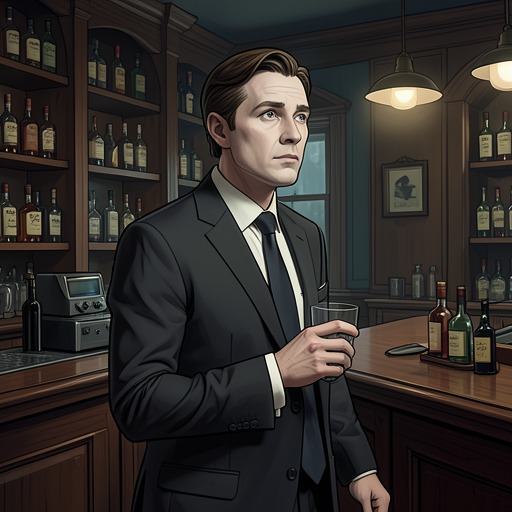
Fitzgerald later drank whisky sours while waiting to telephone Zelda. Hemingway says that this was the most he had seen Fitzgerald drink up to that point. The drinks made him more animated and talkative, but he eventually passed out at dinner after eating very little. Hemingway helped get him back to his room. Reflecting afterward, he concluded that alcohol seemed to stimulate Fitzgerald and then poison him, and decided to limit the drinking the next day. This is Hemingway’s observation and response, not a medical diagnosis; it marks an early moment when he recognized that alcohol was making Fitzgerald’s condition harder to manage.
The contrast the next day was striking. Fitzgerald was cheerful and apparently healthy on the drive to Paris, and he entertained Hemingway with detailed accounts of Michael Arlen’s novels. At meals Hemingway ordered only a single bottle of the lightest wine and asked Fitzgerald to help him keep to his own limit. Fitzgerald cooperated, even giving Hemingway some of his share when he noticed him becoming nervous near the end of the bottle. The episode shows that, in this instance, Fitzgerald could assist another person’s restraint even though his own drinking had just alarmed Hemingway.
The Paris Cycle of Drinking and Work
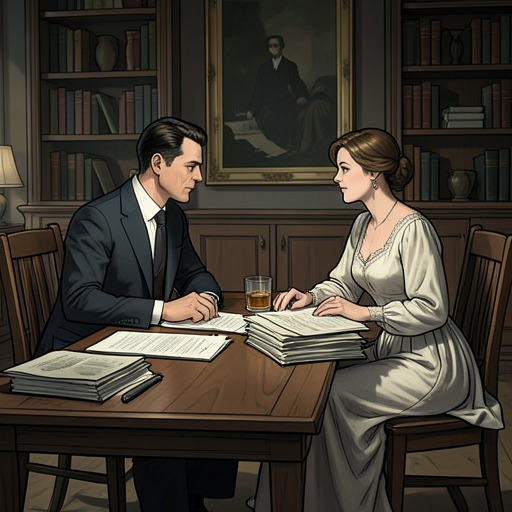
As Hemingway came to know Fitzgerald and Zelda, he describes a recurring pattern. Fitzgerald would resolve to avoid all-night drinking parties, exercise each day, and work regularly. Once he had begun working well, Zelda would complain of boredom and draw him toward another party. The couple would quarrel and make up; Fitzgerald would then take long walks with Hemingway to recover from the alcohol and renew his determination to work. He might start successfully, but the pattern would begin again. The problem was therefore not simply a sequence of isolated binges: it repeatedly interrupted attempts at routine and renewed effort.
Hemingway also describes drinking as bound up with the couple’s social life and jealousy. Zelda’s interest in parties and the attention she received amused her, he reports, while making Fitzgerald jealous; Fitzgerald nevertheless felt he had to accompany her. At Montmartre parties, each feared the other might pass out. Earlier, Hemingway says, the couple had often fallen unconscious after drinking and woken refreshed, as though sleep had interrupted the episode before it caused bodily damage. By this spring, that pattern had changed. Zelda could drink more than Fitzgerald, while he feared her passing out among the people and in the places they frequented. He drank more than he could handle in order to endure those settings, and then drank to remain awake past the point when he would previously have fallen asleep.
This alteration had a direct consequence for Fitzgerald’s work. Hemingway says that he had few intervals of work at all, although he continued to try each day. Fitzgerald blamed Paris, despite Hemingway’s view that it was exceptionally well organized for a writer. He imagined that another place might allow him and Zelda to live well together again. The French Riviera became part of this hoped-for alternative: Fitzgerald pictured swimming, modest drinking, exercise, and daily work, and invited Hemingway and Hadley Richardson to join them. The plan expressed a desire for a more disciplined life, but the account does not present the imagined routine as a solution that had already been achieved.
Escalation and Its Effect on Friendship
During the late spring and early summer, Fitzgerald fought to work but managed only short stretches. Hemingway remembers him as cheerful and companionable, sometimes almost desperately so, and says he wrote one good story, “The Rich Boy.” This remaining work matters to the portrait: Fitzgerald’s drinking and disrupted routine did not erase his capacity to write, but they made sustained effort difficult and unreliable.
After Hemingway spent the summer in Spain drafting a novel, he returned to Paris in September and found Fitzgerald changed. Fitzgerald and Zelda had been at Cap d’Antibes, but he had not sobered up there. He was now drunk during the day as well as at night and came to Hemingway’s home on Rue Notre-Dame-des-Champs at any hour. Hemingway also noticed that Fitzgerald had begun treating people he considered inferior rudely. On one visit, Fitzgerald was caring for his young daughter because the English nurse had the day off. When a proprietor tried to direct him to a nearby lavatory after the child said she needed one, Fitzgerald threatened him. The incident makes the change concrete: the drinking now accompanied daytime visits, impaired conduct, and conflict beyond the couple’s parties.
Hemingway describes Fitzgerald as difficult that fall, but also preserves a distinction between his states. When sober, Fitzgerald was pleasant, still made jokes, and could joke about himself. When drunk, he often sought Hemingway out and took nearly as much pleasure in interrupting Hemingway’s work as Zelda took in interrupting his. Hemingway says that this continued for years, while Fitzgerald remained one of his most loyal friends when sober. The friendship endured, but the difference between sober loyalty and drunken interference became one of its defining conditions.
A Repeated Struggle, Not a Simple Decline
The account presents Fitzgerald as persistently trying to work, not as indifferent to writing. He repeatedly made resolutions, began again, and sometimes produced substantial work; in the fall, Hemingway knew that he had begun a novel when sober, though Hemingway rarely saw him sober. The problem lay in the fragility of those working intervals and the recurring return to alcohol, parties, and interruption. Zelda’s jealousy of Fitzgerald’s work and Fitzgerald’s jealousy in turn intensified the social conflicts around drinking, but Hemingway also describes Fitzgerald as deeply in love with her. Their pattern is presented as entangled and repetitive rather than reducible to a single cause.
Hemingway’s role shifts between companion and observer. On the French journey he tried to manage Fitzgerald’s drinking by limiting his own wine order and planning to curb Fitzgerald’s consumption; later, he walked with him as he tried to recover and resume work. At the same time, Hemingway’s narrative does not claim that friendship or a new setting cured the problem. Fitzgerald’s hopes for a more orderly life on the Riviera coexist with his worsening Paris routine, and his continued efforts to write coexist with periods of drunkenness and intrusion. The result is a portrait of a problem that grows in reach: from an alarming episode on the road to a repeated disruption of work, social conduct, and friendship, while leaving intact Hemingway’s account of Fitzgerald’s wit and loyalty when sober.